
Barcelona maritime heritage: Drassanes, Port Vell and Port Olímpic
The Drassanes, Port Vell and Port Olímpic reveal different chapters of Barcelona’s relationship with the sea. Learn how to recognise them before visiting the museum or sailing.
Barcelona’s maritime history becomes clearer when you distinguish its different places. The Drassanes tell a story of shipbuilding; Port Vell preserves reminders of harbour life, while Port Olímpic offers a connection with recreational sailing. This guide suggests ways to interpret that heritage and relate it to a sailing trip, keeping the locations and activities clear.
The Drassanes: a building shaped by changing uses
The Drassanes Reials, or Royal Shipyards, began in the mid-13th century outside Barcelona’s city walls. Galleys and warships were built and maintained there. Their history helps you imagine the work behind each vessel, long before recreational sailing became part of a visit to the city.
The Maritime Museum explains that the complex was a major galley factory until the mid-18th century. Later military uses included barracks, a prison and a cannon foundry. Distinguishing those later functions from the original shipyard helps make sense of the different stages in the building’s history.
When looking at the halls, remember that a medieval origin does not make every surviving structure medieval. According to the Catalan government’s heritage service, the present large halls date from the 16th century and retain a Gothic style. This gives you a way to read the building as a place that evolved, rather than a scene preserved from a single period.
- The complex originated in the mid-13th century.
- Galley production continued until the mid-18th century.
- The present halls are 16th-century buildings in a Gothic style.
The museum: approach objects with specific questions
The museum was created in 1936 and its collections moved to the Drassanes; it reopened in 1941 as the Maritime Museum of Barcelona. The collections described by the heritage service include ship models, nautical instruments and maps. They offer ways to understand how vessels were represented and how navigation was studied.
One approach is to choose a model and a map, read their labels and ask what purpose they served and what information they gave their users. This connects the objects with practical decisions at sea. Check the museum’s website for current exhibitions and visiting arrangements, since an object belonging to the collection may not always be on display.
- Look at what objects were used for, as well as their appearance.
- Distinguish the history of the building from that of the museum.
- Check the Maritime Museum of Barcelona website for visiting information.
Port Vell and Port Olímpic: locate them before setting out
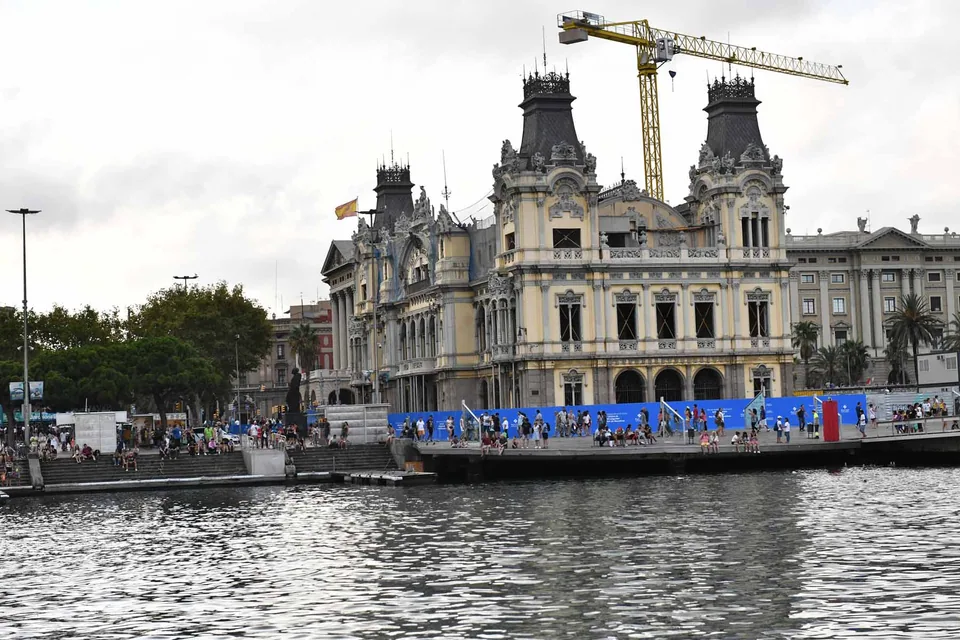
Port Vell lies at the end of La Rambla, beside the Columbus monument and near the Drassanes. On its waterfront, Palau de Mar occupies former commercial warehouses. These buildings suggest another aspect of maritime life: alongside building ships, the city needed places to receive and store goods.
Port Olímpic is a separate harbour, between Somorrostro and Nova Icària beaches. It hosted the sailing competitions of the 1992 Games. The Mapfre Tower and Hotel Arts help identify its surroundings. If you plan to visit the museum and then board a boat, mark both destinations separately on your map: the general name “Barcelona port” is not a precise meeting point.
- Drassanes and Port Vell: shipbuilding and commercial history.
- Port Olímpic: recreational sailing and Olympic heritage.
- The museum and your boarding point are different destinations.
Connect maritime heritage with a sailing trip
A two-hour sailing trip from Port Olímpic can add time on the water to a cultural visit. You could observe the hull, sails and relationship between the boat and the wind, recalling what you learned in the museum. These are suggestions for observation; a sailing excursion does not imply a guided history tour or admission to the Drassanes.
Arrange the museum visit separately. Check your chosen activity’s boarding location and inclusions; the route depends on conditions and the skipper’s judgement. To connect the experiences, write down a navigation question during your museum visit and look for an answer in the exhibition’s explanations, or ask the crew when appropriate.
- Choose an aspect of sailing you would like to understand.
- Check what your selected trip includes.
- Relate observations on board to what you learned ashore.
Sources and useful information
General guidance only. The route, swimming and navigation always depend on sea conditions and the skipper’s judgement.
Related experiences
More Barcelona sailing tips
 Travel Guides
Barcelona Cruise Port Guide: Terminals, Getting to the City and What to Do
Discover how to get from Barcelona's cruise terminals to the centre and what options you have to make the most of a few hours in the city.
Read article Barcelona Guides and Nature
Natural spaces and botanical gardens in Barcelona: a journey through its diversity
Explore the network of protected natural spaces, urban parks and the Jardí Botànic de Barcelona, highlighting its botanical wealth on the hill of Montjuïc.
Read article