
Lighthouses and Maritime Signals on the Barcelona Coast: Navigation History
Explore the fascinating heritage of lighthouses and signaling towers that have guided ships along Barcelona's Mediterranean coastline.
The Barcelona coast holds a rich history of navigation and maritime guidance. From medieval watchtowers to nineteenth-century historical lighthouses, the Catalan coastline has depended on lighting and visual signaling systems to guide sailors safely into port.
The Llobregat Lighthouse: Dean of the Barcelona Coast
Officially inaugurated on the first of January in 1852, the Llobregat Lighthouse remains the oldest active contemporary lighthouse across the entire coastline of Barcelona. In its initial era, it served as a benchmark model for the development of the coastal lighting program in Spain.
It was originally built at a distance of three hundred metres from the coastline. However, marine erosion and successive port expansions modified its surroundings, placing it in a position where the retreat of the coast caused certain structural risks. Despite finding itself today within the port boundaries, it remains operational for navigation thanks to the power of its luminous range.
Over the years, this lighthouse has incorporated modern navigation aid technology. In 1969, a radio beacon was installed, which was later replaced in the year 2001 by a differential GPS station capable of correcting the inaccuracies of the standard GPS system within a one-hundred-mile radius.
- First illumination date: 1 January 1852
- Original location: 300 metres from the shoreline
- Technological upgrade: radio beacon in 1969
- Integrated differential GPS station in 2001
The Montjuïc Lighthouse and Port Evolution
Built in the year 1906 and put into service in 1925, the Montjuïc Lighthouse responded to the need to provide the coast with a light beam of greater range than that of Llobregat. Its strategic location high up on the mountain of Montjuïc granted it the perfect height.
Architecturally, this tower stands out as one of the most elaborate and ornate examples of lighthouse architecture in Catalonia. Its elevated position allowed it to overcome the visual limitations of constructions closer to sea level.
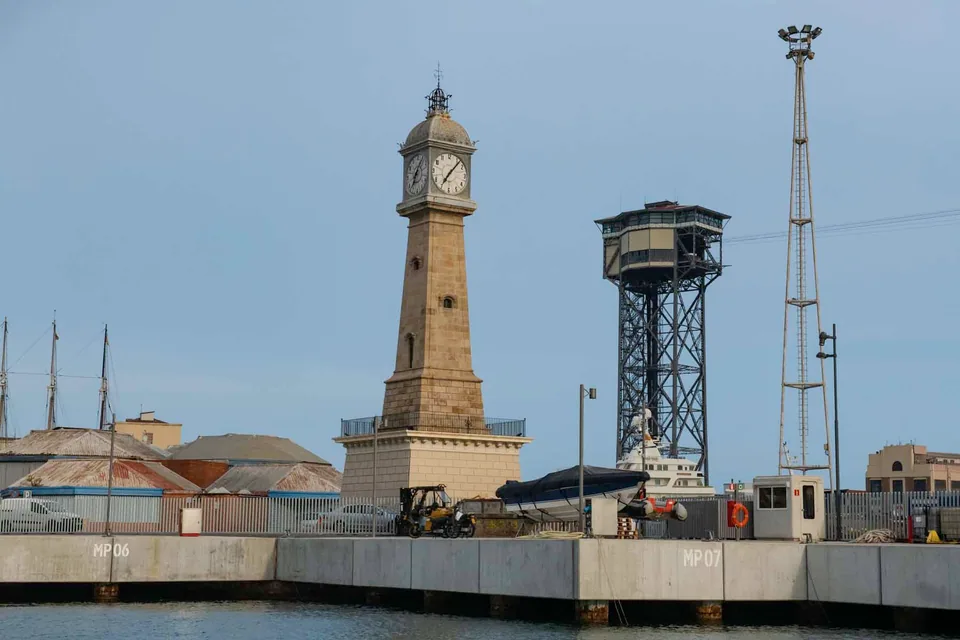
Historically, the entry of ships into the Port of Barcelona depended on very precise visual references. As early as 1772, the port featured a luminous signaling point located in the exact position where the well-known Clock Tower now stands.
- Construction: year 1906
- Put into service: year 1925
- Location: Montjuïc mountain
- First historical port point at the Clock Tower around 1772
Watchtowers and Defense Against Threats
Long before the arrival of modern iron and masonry lighthouses, the Catalan coastline required defensive and early warning systems. The watchtowers played a fundamental role in the detection and transmission of alerts regarding imminent dangers.
These structures were usually erected at elevated geographical points to maximise the field of view over the Mediterranean Sea. From there, lookouts could spot hostile incursions in advance, such as frequent pirate raids, and quickly alert the coastal population.
- Main function: threat detection and warnings
- Placement: elevated points for maximum visibility
- Protection against pirate incursions on the coastline
Sailing Today Facing Barcelona's Maritime Legacy
Contemplating the Barcelona coast from the sea allows one to understand the magnitude of its seafaring history. When setting sail from local ports, current sailors continue to cruise the same waters that for centuries were watched over from dry land by towers and lighthouses.
Enjoying a sailboat trip or a private outing offers a unique perspective of this cultural heritage, connecting the modernity of current nautical infrastructures with the ancient reference points that guided generations of sailors.
- Historical perspective of the coast from the water
- Connection between ancient heritage and modern nautical activities
Sources and useful information
General guidance only. The route, swimming and navigation always depend on sea conditions and the skipper’s judgement.
Related experiences
More Barcelona sailing tips
 Travel Guides
Barcelona Cruise Port Guide: Terminals, Getting to the City and What to Do
Discover how to get from Barcelona's cruise terminals to the centre and what options you have to make the most of a few hours in the city.
Read article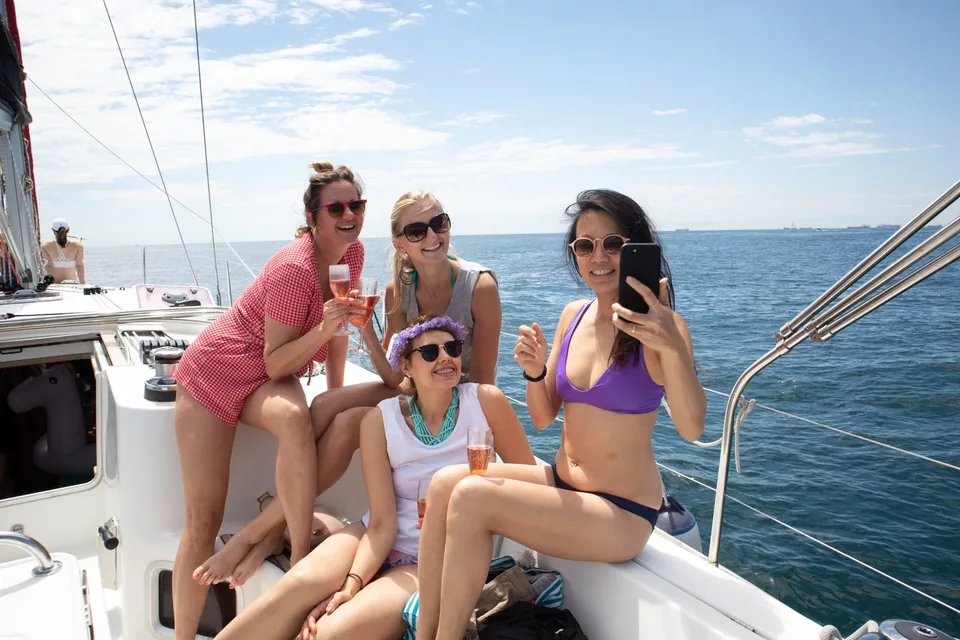 Barcelona Guides and Nature
Natural spaces and botanical gardens in Barcelona: a journey through its diversity
Explore the network of protected natural spaces, urban parks and the Jardí Botànic de Barcelona, highlighting its botanical wealth on the hill of Montjuïc.
Read article